

Iran locks the Strait of Hormuz, trapping one-fifth of global oil flow instead of yielding to pressure
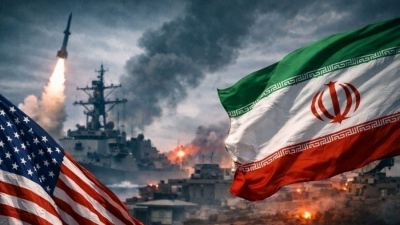
Absolute panic has gripped the White House as it becomes clear that the attack on Iran was launched without a coherent plan, causing the war to spiral out of control. Instead of succumbing, Iran has paralyzed the West by blocking the Strait of Hormuz, suffocating a global economy that was still struggling to recover from the impact of the coronavirus pandemic. The White House is in a state of nervous collapse, as the "worst-case scenario" has transformed into a nightmare reality threatening to drown the world economy and derail the presidency of Donald Trump.
The war is out of control
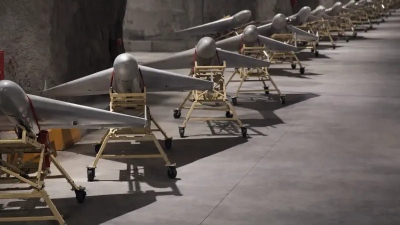
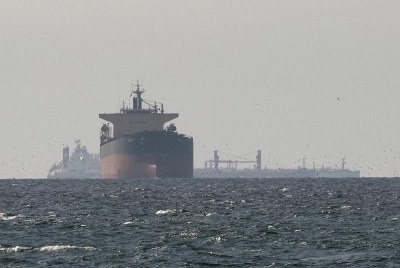
Where the American president’s staff once promised a "surgical" and brief operation, they now face an endless nightmare. Iran, far from bending, has "locked" Hormuz, trapping one-fifth of the world’s oil flow. The failure to foresee this move is not just an operational error—it is proof that the strategy of the Pentagon and the National Security Council has collapsed like a house of cards. US Navy officers report an inability to escort tankers, citing a lack of orders and the suicidal nature of operations facing Iranian drones and sea mines.
Oval Office in disarray
As the world watches the collapse of energy markets, the situation inside the White House has disintegrated. Trump’s advisors are at each other's throats. On one side, "hawks" like Lindsey Graham and Tom Cotton push for escalation regardless of the cost. On the other, economic advisors are sounding the alarm, warning that gasoline prices, which are rising like rockets, will incinerate any hope for the midterm elections in November.
Trump appears trapped. His contradictory statements—ranging from "we won the war" to "we must finish the job"—betray a man struggling to manage a chaos he ignited. His team desperately attempts to project an image of "control," but the raw reality is that the operation has turned into an endless quagmire with no visible exit strategy.
The election nightmare
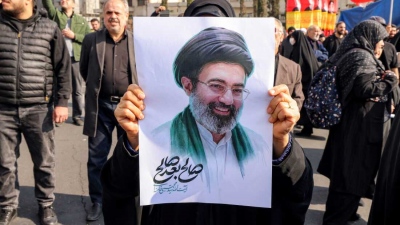
Fear has "hit red" ahead of the November midterm elections. Trump’s consultants are well aware that American anger over the cost of living and skyrocketing fuel prices could turn support for the president into a political death sentence. In a move of sheer panic, the Treasury Department "unfroze" Russian oil, issuing a "general license" for the sale of crude and petroleum products loaded before March 12. However, experts admit these are merely "aspirins" for a bleeding patient. Iran remains defiant, its new leader declares Hormuz will remain closed as a tool of pressure, and the world watches with bated breath.
These behind-the-scenes maneuvers underscore the high stakes for Trump, who returned to power in 2025 promising to avoid "stupid" military interventions, only to find himself entangled in a war that has shattered financial markets and disrupted international trade. According to Reuters, the competition for Trump’s ear is a hallmark of his presidency, but this time the stakes involve war and peace in the world's most economically critical region. Moving away from his broad initial goals set on February 28, Trump now claims the conflict is a limited operation whose objectives are largely met—a message that remains unclear to energy markets.
At a campaign-style rally in Kentucky on Wednesday, Trump claimed "we won," before immediately shifting tone: "We don't want to leave early, do we? We have to finish the job."
The economic shock
Economic advisors and officials from the Treasury and the National Economic Council have warned Trump that an oil market shock and rising gas prices could quickly erode domestic support for the war. Political strategists, including Chief of Staff Susie Wiles and deputy James Blair, make similar arguments, focusing on the political consequences of fuel costs and urging Trump to define victory narrowly to signal the operation is nearing completion.
Opposing them are "hardline" voices calling for continued military pressure, such as Senators Graham and Cotton, and media commentators like Mark Levin. They argue the US must prevent Iran from obtaining a nuclear weapon and respond forcefully to attacks on American troops and vessels. A third force comes from Trump’s populist base, including Steve Bannon and Tucker Carlson, who press him to avoid another prolonged Middle East conflict. "He allows the hawks to believe the campaign continues, wants markets to believe the war ends soon, and his base to believe escalation is limited," a Trump advisor noted.
Seeking an exit
When he led the US into war, Trump provided little explanation, and the administration's goals ranged from preempting an attack to crippling the nuclear program or even regime change. As he seeks an exit from an unpopular conflict, Trump is attempting to balance competing narratives, a move critics say has complicated a situation where Iran remains unyielding despite devastating US-Israeli airstrikes.
Top advisors have played a key role this week in trying to calm nervous markets and restrain oil prices. His public shift toward downplaying the war, calling it a "short-term parenthesis," and insisting fuel spikes are temporary, aims to allay fears of an open-ended conflict. Some advisors urge him to frame the end as a military triumph, even if the Iranian leadership survives. While waves of strikes have killed top Iranian officials among roughly 2,000 casualties and destroyed parts of the ballistic arsenal, these achievements are undermined by intensified Iranian attacks on tankers in the Gulf. Trump insists he alone will decide when to end the campaign, claiming they are ahead of the original four-to-six-week schedule.
The Venezuela miscalculation
Part of the confusion regarding the war's trajectory appears to stem from the quick military success in Venezuela. From the start, advisors struggled to convince Trump that an Iran campaign would not mirror the January 3rd operation in Venezuela that led to the capture of Nicolás Maduro. That operation allowed Trump to exert significant influence over vast oil reserves without prolonged military action.
Iran, by contrast, has proven to be a far more difficult and better-equipped adversary. Experts have dismissed claims from Trump’s circle that Iran was weeks away from a nuclear weapon, despite the president's insistence that strikes had "eliminated" the program. It is believed much of the uranium remains buried and potentially recoverable. If the war drags on and American casualties mount, analysts expect a decline in support from Trump’s political base. However, for now, the "MAGA" movement largely stands by him on the Iran issue.
John Kiriakou (Ex-CIA): The US won’t win, and Trump knows it
Former CIA officer John Kiriakou stated that the US and Israel cannot win a conflict with Iran and that Trump is aware of this. It is worth noting that while Trump claimed in 2025 to have dismantled Iran's arsenal, officials are now once again claiming to have "destroyed" the Iranians in this second offensive.
Douglas MacGregor: Americans will fail at Hormuz; they will just die
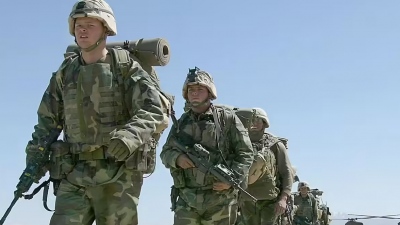
The United States has entered a period of grave danger, and confronting Tehran in the Strait of Hormuz has become an impossible task for the US Armed Forces, stated former Pentagon advisor Douglas MacGregor. "The more you hear from President Trump about how great everything is, the greater the chance we are in a situation of serious peril."
According to MacGregor, the US has proven powerless against Iran’s blockade of Hormuz, on which the global economy depends. "I find it funny when people say the US will easily open the Strait. Seriously? Good luck with that. We’ll see how the Navy handles it. For the US, it is an impossible task. Everyone will just die in huge numbers and nothing will be achieved," MacGregor concluded.
www.bankingnews.gr




Σχόλια αναγνωστών